Agriculture and Livestock
Extremadura has an agricultural tradition that goes back centuries. Its predominantly rural population has, over time, learned how to work with the land and adapt to the climate. This has resulted in farming and livestock practices that are time-tested and highly sustainable.
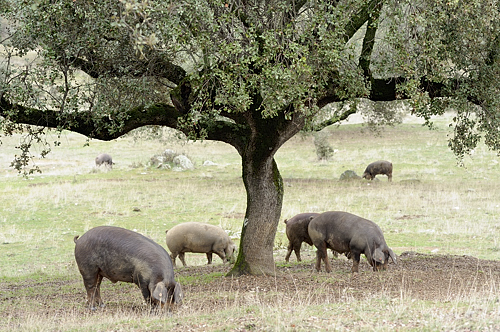
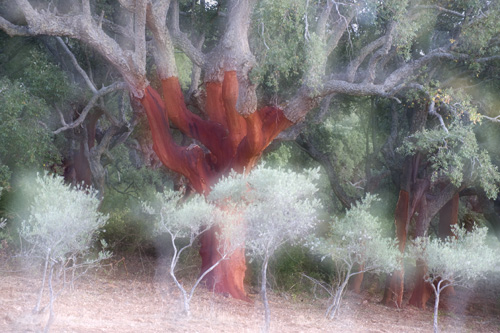
From an economic perspective, Extremadura is particularly important for the production of cork, charcoal, olives and cured ham. There is very little industry. As a result, the region has enormous potential for responsible (nature-based) tourism, and large parts of Extremadura have fortunately remained virtually untouched.
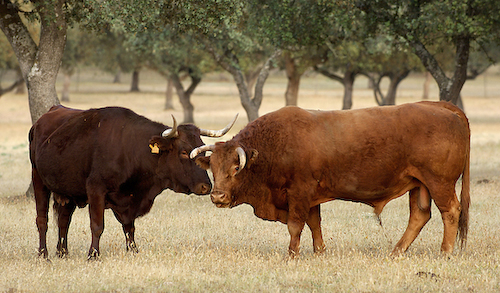
Livestock farming plays an important role in the region. Cattle, sheep, goats and pigs can be seen everywhere. Here, livestock is still raised in a way that many of us remember from the past.
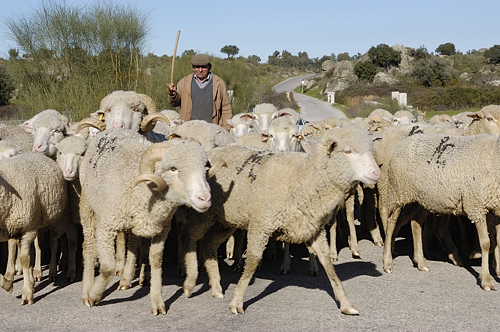
Through the centuries-old system of transhumancia, in which livestock was moved from the mountains to the lowlands in autumn and returned to the mountain pastures in early summer, overgrazing of the steppes and dehesas was prevented. For centuries, herds made this journey on foot along walled drove roads known as cañadas. It was ecological connectivity at its very best.
Such journeys took weeks, if not months, and were a true test for both animals and shepherds. Through selective breeding, strong and resilient livestock breeds emerged — animals capable of surviving under these demanding conditions.
The merino sheep, originally of Berber origin, spread from Spain to all corners of the world. Today, livestock is transported by lorry or train, although it is, of course, far more economical to bring feed to the animals themselves — which is now the common practice.
Occasionally, small-scale initiatives can still be found that seek to revive the traditional system of transhumancia, using the ancient cañadas once again.